Streptozotocin (STZ)-Induced Diabetes in Neonatal Rats: A Model for Studying Diabetic Complications
Abstract
Background: In the journey of new drug discovery, agents such as Streptozotocin (STZ) are frequently employed to create experimental conditions, as diabetic complications remain the major contributor to mortality in diabetic patients despite controlled blood glucose levels. Animal models play a major role in this process; however, while a large number of chemical-induced and genetically modified animal models have been investigated to induce diabetic complications, none have been found to perfectly mimic the complex pathophysiology of humans. Therefore, the search and identification of the most appropriate animal model become essential for advancing diabetic research.
Objective: In the present review, we have made an attempt to understand the pathophysiology of diabetic complication in the neonatal streptozotocin-diabetic rat model and tried to identify the targets for therapeutic agents. The review will help the researchers to explore the animal model to induce diabetic complications, to identify targets and further to find lead molecules for treatment or prevention of diabetic complications.
Methods: We have compiled the available research work from 1974 by using prominent databases, organized the available information and analyzed the data to improve the understanding of the pathophysiology of streptozotocin-induced diabetic complications in neonates of rats.
Results: The neonatal streptozotocin-diabetic rat model is frequently used and well-established animal model for type 2 diabetes mellitus. We have found that this model has been used to study the pathogenesis of various micro and macrovascular diabetic complications and also investigated for its effects on the liver, thymus gland, and brain. The underlying pathophysiology for complications had a resemblance to the human.
Conclusion: The neonatal streptozotocin-diabetic rat model may demonstrate symptomatic diabetic complications due to persistent hyperglycemia at the age of approximately 18 to 24 weeks. Critical interpretations of available research work showed that the researcher can explore split dose STZ 90 to 100 milligrams per kilogram body weight model to induce Type 2 DM in neonates of rats at 2nd or 3rd postnatal day.
Keywords: Streptozotocin, neonatal rats, diabetic complications, animal model, pathophysiology, insulin.
Introduction
Diabetes mellitus DM is a metabolic and lifestyle disorder, clinically diagnosed by hyperglycemia and or low insulin secretion. There are two distinct types Type 1 and 2 DM. Type 1 DM results due to loss of beta cells, thus pancreas fails to secrete enough insulin. In contrast, Type 2 DM showed a failure of body cells to respond to secreted insulin from beta cells, insulin deficiency may also experience upon progression. Although Type 2 DM represents 90 percent or more of all diabetic cases, other types like gestational diabetes, chemical or drug induced diabetes due to endocrinopathies and insulin receptor disorders also exist. As per the International Diabetes Federation’s global fact sheet 2017, approximately 425 million adults were suffering from diabetes and this may rise to 629 million by 2045. In addition, 4 million deaths were reported due to diabetes, 1,106,500 children were living with type 1 DM and 352 million people were at the verge of developing type 2 DM. High prevalence is mainly expected in Asia, the Middle East and Africa.
Consistent chronic hyperglycemia had deleterious effect on multiple organs and appears as diabetic complications, which mainly responsible for morbidity and mortality in diabetic patients and can be understood by splitting into acute complications ketoacidosis, coma and chronic complications macrovascular and microvascular, apart from these, depression, dementia, and sexual dysfunction can be categorized under chronic diabetic complications.
Macrovascular complication involves large vessels coronary artery disease, peripheral arterial disease, and stroke. Microvascular complication involves small vessels diabetic nephropathy, neuropathy, and retinopathy. Several mechanisms have been proposed to explain pathophysiological events taking place during the development of diabetic complications. The most studied mechanisms include increased polyol pathway, DAG activation of PKC pathway, oxidative stress, advanced glycated endproduct AGE formation and increased hexosamine pathway. In the polyol pathway, intracellular glucose is converted to sorbitol by aldose reductase AR, which is then oxidized to fructose by sorbitol dehydrogenase SDH, a nicotinamide adenine dinucleotide phosphate NADPH dependent reaction. In a normoglycemic condition, small amount of glucose is metabolized to sorbitol but in diabetic states, hyperglycemia can cause an increased flux through AR. AR and SDH use NADPH and nicotinamide adenine dinucleotide NAD plus as a cofactor, respectively. Therefore, the reduced cellular NADPH level and the increased NADH to NAD plus ratio changes the intracellular redox balance resulting in the reduced production of nitric oxide and increased oxidative stress. Diacylglycerol DAG is a crucial intracellular signaling molecule that can control various vascular functions. In diabetes, many studies have reported the increased DAG level in various tissues retina, glomeruli, aorta and heart which contributes to the development of diabetic complications. The hexosamine biosynthesis pathway HBP is a branch of glycolysis. In HBP, Fructose-6-phosphate is converted to glucosamine-6-phosphate which ends on the formation of UDP-N-acetylglucosamine building blocks for glycosyl side chains of proteins and lipids. Several investigators proposed that HBP act as a cellular nutrient sensor and plays a vital role in the development of insulin resistance and the vascular diabetic complications through diminished expression of sarcoplasmic reticulum Ca2 plus ATP-ase in cardiomyocytes and induction of TGF beta and plasminogen activator inhibitor 1 in vascular smooth muscle cells, mesangial cells and aortic endothelial cells. In addition, chronic hyperglycemia causes activation of protein kinase C PKC, which controls the activities of other proteins. PKC has been associated with vascular alterations such as increases in permeability, contractility, extracellular matrix synthesis, cell growth and apoptosis, angiogenesis, leukocyte adhesion, and cytokine activation and inhibition ultimately linked with the development of micro and macrovascular complications. In clinical trial studies, one of the PKC inhibitor showed positive results in diabetic nonproliferative retinopathy, nephropathy and endothelial dysfunction. Apart from these pathways, in hyperglycemia, glucose forms complex with the plasma proteins through a non-enzymatic process known to form AGE. Glycation of proteins interferes with the normal functioning of enzymes, and interfering with enzyme-receptor interaction. AGEs form intra and extracellular cross linking with proteins, lipids and nucleic acids to contribute in the development of diabetic complications.
The induction of diabetic complications in rodents requires long term, persistent hyperglycemia and monitoring of respective biomarkers like microalbuminurea, nerve conduction velocity. A number of animal models have been used having their own advantages and disadvantages. Diabetes induced in neonates of rats by streptozotocin n-STZ reported significant hyperglycemia as compare to traditional diet or nutrition induced diabetic model. Srinivasan and colleagues 2005 used combination of high fat diet and low dose STZ 35 milligrams per kilogram body weight in neonates of rats which was found to mimic metabolic characteristics of Type 2 DM in humans. n-STZ model demonstrated type 2 DM with low dose of STZ and low mortality rate with a split dose while the chemically induced diabetic model produces type 1 diabetes with high mortality rate and requires high STZ dose. Surgical model requires surgical skills, has high mortality and chances are there to have impaired digestive system and failure of counter regulatory response to hyperglycemia due to the dissection of alpha cells along with beta cells. Transgenic or knockout diabetic models are used to study the effect of single gene or mutation. n-STZ model can be utilized to study the effect of drugs on overall gene expression and does not require sophisticated setups for maintenance. n-STZ model is well established for type 2 DM, mimics the characteristics of human type 2 DM with persistent hyperglycemia. It demonstrated different stages of diabetes and pattern of insulin release is similar to Goto Kakizaki GK rats, genetically modified rat model of type 2 DM. In addition, n-STZ model is affordable to researchers working with limited resources.
There is a lack of information where the prospective researcher can get all the information for pathogenesis of type 2 DM in neonates and how and at what duration it develops various macro and micro vascular complications of type 2 DM. Hence it was decided to compile and interpret the available information to improve understanding of pathogenic events and its correlation with pathophysiology of human diabetic complications. This work will help researchers to identify the key therapeutic targets and to find out the efficacy of natural or synthetic leads in diabetic complications.
In this review, we compiled the research works using the electronic databases like Google scholar, PubMed, Embase, Science direct, Medline and Web of Science from 1974 to 2018 using key words such as neonatal diabetes, streptozotocin or STZ, type 2 diabetes, diabetic neuropathy, diabetic nephropathy, diabetic retinopathy.
Clinical Characterization
Induction of Type 2 Diabetes
The research studies reported that the neonate of rat treated with STZ 90 to 100 milligrams per kilogram body weight on the day of birth n0-STZ and 2nd day of birth n2-STZ demonstrated 20 percent reduction in residual beta cell mass, which results in the transient hyperglycemia after approximately 3 to 4 days of STZ treatment due to cytotoxic effect of STZ on beta cell followed by normoglycemia due to spontaneous recovery up to 50 percent after 8 to 10 days of STZ treatment. Return of consistent hyperglycemia was reported at the age of 6 to 8 weeks. One of the studies showed that the newly regenerated cells did not respond to glucose and tolbutamide. The loss of response might be due to incomplete differentiation of newly regenerated cells. This effect can be considered as an evidence for induction of type 2 diabetes. Thereafter, persistent hyperglycemia has been reported which is ranging from 170 to 200 milligrams per deciliter and 200 to 350 milligrams per deciliter in neonates injected with STZ at birth n0-STZ and on the 2nd day of birth n2-STZ respectively. Adolfo and colleagues 2008 suggested that induction of diabetes on the 5th day of birth n5-STZ would be suitable for long term studies. Despite marked decrease in beta cells, little effect was reported on glucagon and somatostatin secretion which shows that the mechanism of counter regulation of hypoglycemia is active in diabetic neonates. n-STZ diabetic rats reported to have impaired glucose tolerance, low GLP-1 content in jejunum, ileum and colon which is a neuropeptide secreted by intestinal L cells and brain. GLP-1, a potent insulin secretogogue, reduces the gastric emptying time, induces satiety and decrease food intake therefore might be responsible for proper weight gain in diabetic rats with no requirement of insulin treatment. The consistent hyperglycemia is responsible for the development of diabetic complications, the underlying pathophysiology is discussed this review.
Induction of Diabetic Complications and Underlying Pathophysiology
Liver Diseases
Liver is an insulin-dependent organ, which is severely affected during diabetes. Hepatomegaly occurs in 80 percent of the diabetic patients and thus appears to be an important cause of death.
Biochemical Changes in n-STZ Diabetic Rats
The research studies reported several biochemical changes in the liver of n-STZ diabetic rats at a dose of STZ 70 to 150 milligrams per deciliter body weight after 4 to 18 weeks of diabetes induction. It includes elevated transaminases AST and ALT levels, liver cholesterol, triglycerides, free fatty acids, phospholipids, HMG-CoA reductase activity, apoptotic markers caspase 8 and 3, lipid peroxidase and oxidative stress markers with reduced glutathione level which is a natural antioxidant, as a consequences of persistent hyperglycemia might be due to reduced liver glycogen deposition along with the beta cell destruction. In normal animal and human tightly regulated process of hypertrophy and hyperplasia involves fine-tuned coordination between growth factors, cytokines and extracellular fluids but it was reported to be disturbed in chronic hyperglycemia in n-STZ diabetic rats and proliferated hepatocytes were reported in histological studies.
Diabetic hepatomegaly is a consequence of hepatocellular glycogenesis. At 18th week of diabetes induction, histopathological reports of liver showed presence of multifocal hepatocellular vacuolation might be a result of increased glycogen storage due to inhibition of glycogen hydrolase as evident in Zuker diabetic fatty rats chronically treated with glycogen phosphorylase inhibitor and upsetting the balance between insulin-independent facilitated diffusion dependent glycogenesis and glycogen phosphorylase dependent glycogenolysis.
n-STZ diabetic rats reported presence of pyknotic nuclei in hepatocytes and infiltration of mono-nuclear cells at the age of 4 weeks which indicates initiation of hepatic necrosis might be a consequence of inflammation, reported hepatic hypertrophy and vacuolations which altogether might mimics some of the pathological characteristics of human diabetic liver and treatment with chromium picolinate reduced moderately hepatocellular vacuolation with hypertrophy. n1-STZ rats reported degeneration and scattered necrotic cells as well as swollen cytoplasmic hydropic and microvesicular vacuoles in hepatocytes after 16 weeks of age which might be a result of free radical generation in the liver.
Interpretation
Livers of n1-STZ and n2-STZ 70 to 150 milligrams per deciliter rat might mimic the pathological characteristics of human diabetic liver at the age of 14 to 18 weeks.
Diabetic Nephropathy
A major diabetic complication, in which the glomeruli get damaged and kidney leaks abnormal amount of protein in urine, manifested by renal hypertrophy, decreased glomerular filtration rate GFR and urinary albumin excretion rate UAER. It can be associated with a high prevalence of cardiovascular risk factors and other conditions such as anemia and electrolyte imbalance.Early intervention focusing on blood pressure and blood glucose control is critical to slowing the progression from microalbuminuria to overt Chronic Kidney Disease .
Biochemical Changes in n-STZ Diabetic Rats
Research studies demonstrated morbidly decreased endogenous creatinine clearance rate, UAER in n-STZ uninephractomized spontaneously hypertensive rats while elevated serum creatinine and urea levels were reported in n-STZ rats at the age of 16 to 18 weeks. This might indicate progressive renal damage. n2-STZ rats demonstrated increased serum levels of total protein, albumin, cystatin c, and beta 2 microglobulin at the age of 8 weeks. Cystatin C and beta 2 microglobulin may be the early indicators of incipient diabetic nephropathy and superior to the serum creatinine while comparing the mild to moderately reduced GFR, collectively these biochemical changes show symptoms of development of diabetic nephropathy in experimental rats. In addition hyperactivity of inflammatory markers like tumor necrosis factor TNF alpha and TGF beta, nitric oxide and vascular endothelial growth factor VEGF had been reported. TGF beta 1 and VEGF via MAPK p42 p44 activates molecules like fibronectin, collagen 1 and plasminogen activator inhibitor 1 PAI-1 leading to glomerulosclerosis. Increase in nitric oxide indicated high systemic and renal oxidative or nitrosative stress. Elevated TNF alpha might indicate initiation of cellular apoptosis and necrosis. Whereas deactivation of adiponectin and erythropoietin in n-STZ rats were also reported. Adiponectin is a protein encoded in ADIPOQ gene responsible for regulating glucose level as well as fatty acid breakdown. Chronic hypoadiponectinemia land up in the progression of proteinuria in early-stage diabetic nephropathy. The mechanism of adiponectin induced proteinuria has been shown to involve a decrease in nephrin expression and endothelial dysfunction because of the increase in expression of Endotheline 1 and Plasminogen activator inhibitor 1 in the renal cortex. Erythropoietin is produced by interstitial fibroblast in the kidney, a major source of haemoglobuline in adulthood as compared to liver in fetal and perinatal period. Type 2 diabetic patients are reported for the development of anemia with renal diseases, the pathogenic mechanism might be activation of RAAS and followed by renal vasoconstriction and decrease in renal function.
In human, the main histological lesions were reported as thickening of glomerular basement membrane GBM, mesangial expansion and mesangial nodules while tubular atrophy and vascular hypertrophy are less frequent. Histological studies in n2-STZ 90 milligrams per kilogram body weight rats indicated the development of renal hypertrophy and abnormal extracellular matrix deposition. It mimics the condition occurred in human renal failure cases. Multiple areas of tubular vacuolations due to glycogen deposition indicate prolonged and persistent hyperglycemia, tubular epithelial hypertrophy might have demonstrated one of the first pathogenic event microalbuminurea of diabetic nephropathy before the glomerular damage. Multifocal tubules revealed degeneration of epithelium characterized by eosinophilic appearance with pyknosis of nuclei in diabetic rats as compared to their respective control groups after 16 to 18 weeks of diabetes induction. Other study reported thickened GBM, capillary occlusion and mesangial expansion in glomeruli of n2-STZ 90 milligrams per kilogram body weight rats. High dose of STZ 150 milligrams per kilogram presented oncogenic action of STZ on kidney at the age of 12 months.
In one of the study, n4-STZ rats have been reported for renal accumulation of insulin-like growth factor IGF II at age of 3 weeks. This effect can explain the mechanism behind renal hypertrophy and also supported by the previously well-established finding that GH IGF IGFBP system is involved in the development of the kidney.
Interpretation
It can be interpreted that n2 and n4-STZ 90 to 100 milligrams per kilogram body weight rats may mimic characteristics of symptomatic human diabetic nephropathy at the age of 8 to 18 weeks.
Diabetic Neuropathy, Dementia and Depression
Consistent hyperglycemia was found to be a cause for the development of neuropathy, dementia and depression in diabetic patients. n-STZ rats are found to mimic these complications.
Biochemical Changes in n-STZ Diabetic Rats
Kandhare and colleagues 2012 induced diabetic neuropathy in n2-STZ 90 milligrams per kilogram body weight and reported significant decrease in motor and sensory nerve conduction velocity, mechanical and thermal hyperalgesia, mechanical allodynia as well as superoxide dismutase SOD, glutathione peroxidase GSHPx along with membrane-bound inorganic phosphate at 6th week of age. It also demonstrated lipidemia and increased levels of glucose, glycated hemoglobin, oxidative-nitrosative stress, total calcium and inflammatory mediators TNF alpha and IL-1 beta levels in blood. Histological images depicting the normal anatomical features of sciatic nerve in non-diabetic control, which is evident by the absence of infiltration of neutrophils as well as macrophages or necrosis of nerve. In contrast, n-STZ rats have been reported for significant histopathological changes that is presence of neutrophils and macrophages, as well as congestion and edema in the nerve cells. n-STZ rats also showed necrosis in the nerve cell with vacuolization which results in swelling of nerve fibers nonmyelinated and myelinated along with reduced quantity of myelinated fibers. Recently, n-STZ rat model has been validated for the induction of neuropathic pain. They have reported activation of satellite glial cells, microglia and astrocytes in dorsal root ganglia and spinal cord at week 16 in diabetic rats. These changes show similarity with the human long lasting diabetic neuropathic pain.
Another study reported an increase in activities of glucose-6-phosphate dehydrogenase G6PD, 6-phosphogluconate-dehydrogenase 6-PGD and NADPH oxidase Nox in n5-STZ 100 milligrams per kilogram body weight rats which collectively may result in enhanced production of superoxide radical anion. In addition, the increased activity of antioxidant enzymes like SOD, catalase CAT, and GSHPx reported in n-STZ rats at the age of 5 days which may be due to a rebound effect of oxidative stress, was not able to control the observed lipid peroxidation and protein damage in the brain. Consequently, these results suggest that oxidative stress may represent a mechanism behind the altered CNS functioning.
Generally, a reduced acetylcholinesterase AchE level or activity was observed in streptozotocin induced diabetic rats which could be responsible for reduced acetylcholine activity, thus impairment of learning and memory. The probable mechanism could be a reduced AchE level causes accumulation of acetylcholine in synaptic cleft which could inhibit further synthesis and release of acetylcholine via a negative feedback mechanism. Similar observation of reduced AchE with increased lipid peroxidative markers was reported in brains of n2-STZ 100 milligrams per kilogram body weight rats after 24 weeks of age. The decreased AchE causes alteration in neurotransmitter level which may be due to insulin deficiency and results in brain dysfunction. Therefore this model can be tried to induce diabetic dementia but it requires a long induction period.
An increase in the brain weight-to-body weight ratio was observed in n4-STZ 70 milligrams per kilogram body weight rats at the age of 8 and 22 days. Disturbances in the regulation of adenylyl cyclase ACS in the nervous and peripheral tissues as well as the impaired capability for learning and spatial memory have been reported in n5-STZ 80 milligrams per kilogram body weight after 5 months of age. Caio and colleagues 2016 evaluated the insulin, sertraline and their combination in n2-STZ 160 milligrams per deciliter for depression like behavior in 10 week old diabetic rats. The n2-STZ rats demonstrated significantly increased immobility time in the forced swim test.
Interpretation
n2 or n5-STZ 70 to 160 milligrams per kilogram body weight rats approximately at the age of 14 to 24 weeks may mimic the early characteristics of neuropathy, dementia, depression like behavior and impaired capability of learning and spatial memory used to be observed in diabetic patients.
Diabetic Retinopathy
Consistent hyperglycemia causes retinal damage and eventually leads to blindness. It affects 80 percent of all diabetic patients with 20 years or more of diabetes. Research indicates 90 percent reduction of new cases which could be possible by proper and cautious monitoring and treatment of eyes.
Biochemical Changes in n-STZ Diabetic Rats
In one of the study, n1-STZ 50 milligrams per kilogram body weight rats demonstrated elevated inflammatory cytokine production like TNF alpha, IL-1B, ccl2 chemokine, infiltration of macrophages or microglial cells and neuronal cell death. Inflammatory cytokine production is reported to create proinflammatory environment responsible for decreased vascularization and increased neuronal cell loss and decrease in retinal angiogenesis. The observed elevated inflammatory cytokines may be a cause of increased endothelin ET. The earlier reports showed that the m-RNA expression of ET 1,3,A and B receptor was found to be elevated in ocular and retinal tissues of chronic diabetic rats along with the elevated ET1 level. Altered retinal pericytes-ET 1 interaction was reported to be responsible for haemodynamic and histopathological abnormalities causing failure of auto regulation of retinal blood flow, an important and frequently observed early symptom diabetic retinopathy. These changes are similar to ischemic diabetic retinopathy and retinopathy of prematurity ROP. Degeneration of retinal neurons evident by decreased thickness of peripheral inner nuclear layer INL and outer nuclear layer ONL. In addition, it showed unphysiological apoptosis which is evident by presence of apoptotic fragmented nuclei in INL it showed signs of dysplasia in ONL after 21 days of age. This model requires a short duration of time and having a well-defined phenotype and does not depend on insulin treatment for the survival of animals. In another study, n2-STZ 90 milligrams per kilogram body weight reported decline in soluble protein in lens which indicates initiation of protein insolubilization. Increased sorbitol accumulation might be due to activation of polyol pathway or sorbitol pathway through osmotic stress and increased oxidative stress after 20 weeks of diabetes induction. All these pathological changes indicate triggering of the process of cataract formation.
In one of the studies, the combination of high fat diet HFD and STZ showed pronounced phenotypic change as compared to the diabetic rats injected with only higher dose of STZ 90 milligrams per kilogram body weight could be a result of synergistic effect. This model requires a long duration of time 37 weeks to develop symptoms of ROP.
Madhoosudan and colleagues 2014 investigated the effect of impaired glucose tolerance IGT on eyes and reported early symptoms of cataract in IGT rats even after 24 weeks of age but the diabetic rats showed mature cataract, the central mechanism might be elevated oxidative stress in lens, evident by high lipid peroxidation, protein carbonyl and altered SOD activity. In addition, an increase in AR activity and polyol secretion was reported with no AGE formation in the lens. The study showed that the oxidative stress could be the prime therapeutic target for the prevention of diabetic cataract in IGT state.
Interpretation
Based on the evidence of the previous research studies it might be concluded that n2-STZ 45 milligrams per kilogram body weight plus HFD model may induce diabetic retinopathy more efficiently than STZ alone, duration may be 37 weeks of age but early symptomatic retinopathy was reported even after 6th postnatal day of STZ treatment.
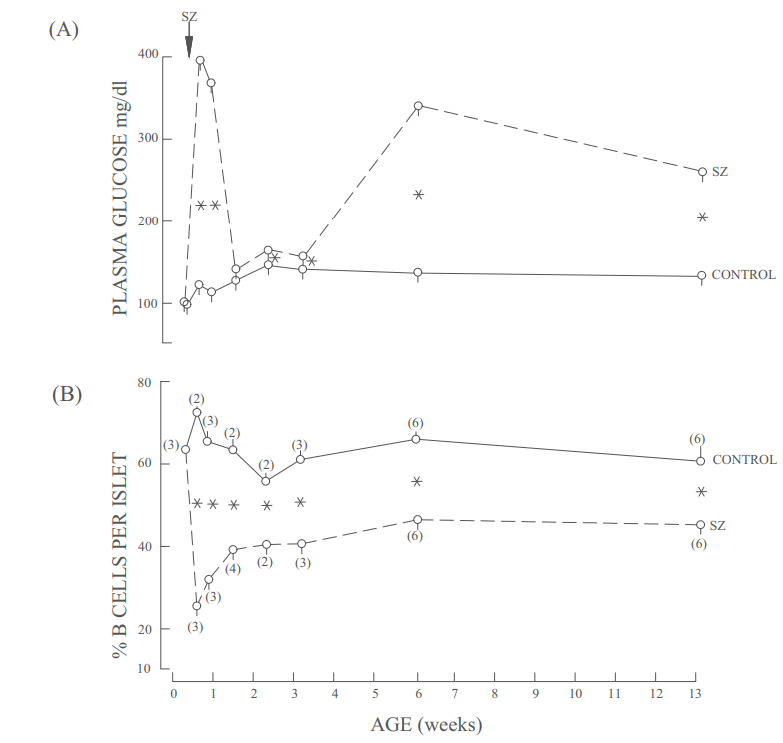
Fig. (1). Effect on plasma glucose (A) on percentage of B-cells per Islet, (B) in n2-STZ rats. ‘Fig. A 2P < 0.05, ‘Fig. B 2P < 0.02. Figures are adopted from Bonner et al. 1981. [18] and modified.
Diabetic Cardiomyopathy
Diabetic cardiomyopathy demonstrated by increased left ventricular LV mass, cell death due to myocardial lipotoxicity, increased triglycerides, cholesterol, oxidative stress, apoptosis and necrosis of cell population inside heart, interstitial, perivascular fibrosis and diastolic dysfunction. The main cause may be accelerated atherosclerosis.
Biochemical Changes in n-STZ Diabetic Rats
Decreased HDL-cholesterol rate and no change in total cholesterol TC level, triglycerides TG level, TBARS level, SOD activity and GSH level have been reported in n5-STZ 70 milligrams per kilogram body weight rats at the end of 4 months of age. These finding might suggest that the hyperglycemia gives HDL-lipoprotein alteration, which is insufficient to impair antioxidant enzyme activities in adult life of rat. Whereas in one of the study treatment with increased dose of STZ 100 milligrams per kilogram increased TC, MDA and reduced plasma glutathione level in rats. The reason of altered oxidative stress parameters might be high dose of STZ. In another study, n2-STZ 100 milligrams per kilogram body weight rats demonstrated elevated level of liver cholesterol, TG, free fatty acids, phospholipids and HMG-CoA reductase whereas decreased G6PD activity was reported after 18 weeks of age. G6PD is reported to maintain normal nicotinamide adenine dinucleotide phosphate NADP level which in turn retains glutathione level. It can be concluded that the STZ injection in neonates of rat induces deactivation of G6PD which gives high oxidative stress and hyperactivity of HMG CoA reductase producing high formation of cholesterol, these two enzymes might be a key target for the new lead compound.
Activated response of inflammatory mediators on arterioles and venules of n-STZ rats along with reduced response to vasodilator was reported but insufficient to alter the systolic blood pressure. The mechanism might be the insufficient reduction in release of NO and or other vasodilator prostaglandin to induce hypertension, supported by another study performed on n2-STZ 160 milligrams per kilogram body weight rats were after 10 weeks of age decreased total NOS activity was observed. Therefore to induce hypertension in diabetic rats STZ can be administered with NG-nitro-L-arginine methyl ester, which might cause reduced activity of cyclic guanine monophosphate and inhibit nitric oxide biosynthesis sufficient to cause vasoconstriction and arterial hypertension with alteration in renal hemodynamics reported after 17th weeks of age in n2-STZ 90 milligrams per kilogram body weight rats. The observed vasoconstriction may be due to hyperglycemia-induced upregulation of ET-1 and m RNA expression of ET-1, ETA and ETB receptors in the heart of diabetic rats. Hence endothelin system may be an important therapeutic target for the treatment of diabetic cardiomyopathy.
In contrast, split dose of STZ 50 milligrams per kilogram body weight at 2nd and 3rd postnatal day demonstrated a significant increase in creatinine kinase, lactate dehydrogenase, TC, TG, atherosclerotic index AI and systolic blood pressure in the diabetic rats only in the last stage of the study. Whereas decreased liver weight, total fat pad weight and adiposity index were reported with no significant modification in the heart rate. The split dose of STZ has the advantage of getting desirable and reliable hyperglycemic state within short duration with low mortality rate. The mechanism might be high beta cell destruction due to the increased dose of STZ in split form and effect of hyperglycemia on the constrictor property of blood vessels. This model is better than HFD-STZ induced diabetes model for inducing diabetes associated hypertension in rats. The split dose of STZ showed increased in amount of linoleate in aortic phospholipids, ratio of linoleate to arachidonate in aortic phospholipids, non-significant elevation in TG and decreased aortic 6-keto-PGF alpha 1 synthesis and quantitative measure of prostacyclin PGI2. PGI2 inhibits platelet aggregation and induces vasodilation. It was found to be related to hypercholestremia after 17 weeks of age in diabetic rats. Therefore the mechanism behind the STZ split dose induced hypertension might be inhibition of vasodilation and platelet aggregation. In addition, hyperactivity of ACS a marker of the functional state of myocardium has been reported in myocardium of the 6 months old diabetic rats.
Interpretation
Through analysis of available research studies, it seems that the elevation in the TC, TG, HMG COA reductase, systolic blood pressure and oxidative stress with reduced NO synthase and G6PD activity can be observed after 12 to 18 weeks of age in n2-STZ 100 milligrams per kilogram body weight rats. Low dose of STZ injected at 5th postnatal day might not give symptoms of cardiomyopathy even after 4 months of age. A split dose of STZ will be a better option to reduce the mortality. Therefore, n-STZ model has the potential to mimic atherosclerosis and symptomatic cardiomyopathy observed in diabetic patients.
Reproductive System
Male diabetic patients are at greater risk of developing sexual dysfunction erectile after a long period of hyperglycemia. Prevalence of sexual dysfunction lubrication problem, decreased sexual desire, dyspareunia, arousal problem, and orgasmic dysfunction in diabetic females with depression was also reported to be high. It is a well-documented complication of diabetes.
Biochemical Changes in n-STZ Diabetic Rats
Reduced testosterone level in serum and testicular interstitial fluid, weak sperm quality parameters and erectile dysfunction were observed in n2-STZ 40 to 90 milligrams per kilogram body weight rats at the age of 10 to 12 weeks whereas reduced locomotor activity, sperm quantity, sensitivity of the ACS signaling towards human chorionic gonadotropin and pituitary adenylyl cyclase-activating polypeptide have been reported in n1 or n5-STZ 80 to 100 milligrams per kilogram body weight in diabetic control rats after 17 to 23 weeks of age. The underlying mechanism may be the altered neuroendocrine-reproductive tract axis.
In female diabetic rats, earlier reported studies showed no change in gonadotrophins but inhibition of ovarian hormones, alteration in estrous cycle anovulation, prolongation of estrous cycle duration and lower lordosis quotients. n-STZ 100 milligrams per kilogram female rats demonstrated high progesterone and lower beta-estradiole level as compared to rats of control group with no significant change in estrous cycle duration at age of 16 weeks. The explanation to high progesterone may be inhibition of conversion of progesterone to testosterone or aromatization of testosterone to estradiole suggested by Meurer and colleagues and the induced mild hyperglycemia might be insufficient to alter the regular schedule of estrous cycle.
Interpretation
n2 or n5-STZ 90 milligrams per kilogram body weight or more rats up to the age of 24 weeks may demonstrate symptoms of sexual dysfunction similar to frequently observed symptoms in diabetic male and female patients.
Thymus Gland and Skeletal Muscles
n2-STZ 85 to 100 milligrams per kilogram body weight reported the decreased NO synthase activity and its sensitivity to insulin in muscle which supports its frequent use as a type 2 diabetes model. In thymus gland, it demonstrated atrophy, decreased in T cells count and Ca plus ATPase activity which leads to increased intracellular calcium and apoptosis in thymus gland. The underlying mechanism may be the reduced NO synthesis which is an important cellular signaling molecule, helps to modulate vascular tone, insulin secretion and act in immune defense mechanism.
Reduced number and efficiency of insulin receptors, adipose size, pancreatic insulin content and adipose mass may be considered as an evidence in the model of type 2 DM with sustained insulin resistance in adulthood of rats. In addition, decreased vascular permeability was reported in high dose n1 or n5-STZ 150 to 160 milligrams per kilogram body weight model after 8 to 12 weeks of age.
Interpretation
Critical observation and analysis of previous research indicate that the n-STZ model can be further explored to study the skeletal muscles and thymus gland dysfunction. It is interpreted that n2-STZ 100 or 160 milligrams per kilogram has the potential to mimic human diabetes associated dysfunction of skeletal muscle and thymus gland after 6 to 12 weeks of age.
Therapeutic Applications
Currently, n-STZ rat model is used to investigate various phytochemicals, well established drugs and reported encouraging results. Some of the examples are discussed here to understand its usefulness in the pharmacotherapy research.
Quercetin and tocopherol were investigated against diabetic neuropathy in neonates of rats after 6 weeks of diabetes induction and both of them showed significantly improved histological findings. Hypertension was induced in n-STZ rats and reported to be decreased by glibenclamide, captopril and virgin argan oil VAO obtained from the fruit of Argania spinosa. In addition, Aliskiren, an anti-hypertensive drug was investigated for its potential in diabetic nephropathy and showed an improvement in altered parameters. Ghrelin is a peptide hormone, was investigated for the protective effects on liver and was found to improve immunoreactivity of obestatin, Caspase 8, Caspase 3 and proliferating cell nuclear antigen. Serum AST and ALT activities were also reported to be decreased after ghrelin treatment in n-STZ diabetic rats. Lactobacillus strain GG is a probiotic, reported to decrease blood glucose levels and glucose tolerance in n-STZ rats. Effect of intranasal insulin and serotonin was investigated on the activity of adenylyl cyclase ACS in myocardium and reproductive tissues of female n-STZ rats and reported to normalize the functional activity of ACS. It was reported that the n-STZ model is close to human type 2 DM and demonstrates pronounced resistance of nervous and peripheral tissues to insulin and moderate hyperglycemia. In one of the study, D-phenylalanine derivative and metformin were reported to decrease blood glucose level significantly with significant increase in plasma insulin level. Thus, the current findings were sufficient to reach the conclusion that n-STZ rat model has wider research applicability and potential to mimic the human pathophysiology of diabetes and its complications.
Conclusion
Based on the previously reported research studies, reviews and their critical interpretations it is suggested that researcher can explore split dose STZ 90 to 100 milligrams per kilogram body weight model to induce Type 2 DM in neonates of rats at 2nd or 3rd postnatal day. This model may demonstrate symptomatic diabetic complications due to persistent hyperglycemia at the age of approximately 18 to 24 weeks. The major advantage of this model is it mimics pathophysiology of early diabetic complications present in human and its affordability for the researcher working with the limited resources.